Friday, September 23, 2016

Listening to each other...more important than ever

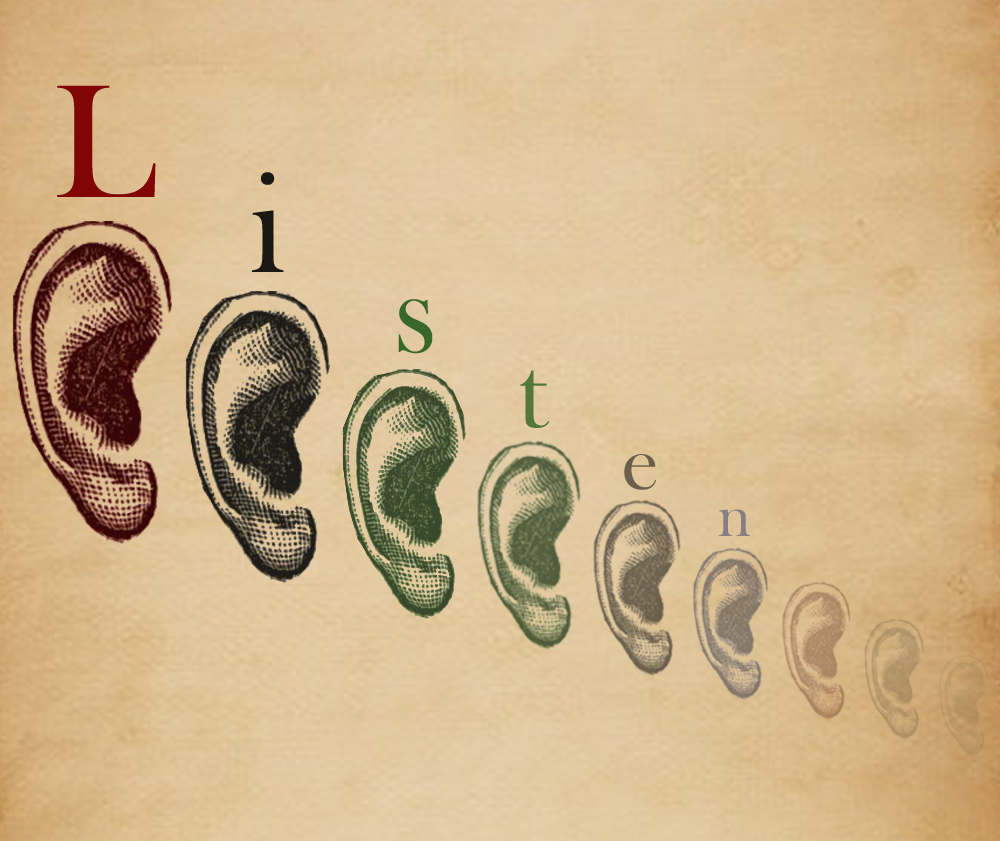
In my last post I noted that one of my goals for this school year was to listen deeply. As some of the events of the last few weeks and months become more controversial and violent, I find that my Facebook posts have developed a pattern. That pattern is about the need to listen, truly listen, and deeply, to each other's stories. As novelist Chimamanda  Ngozi Adichie reminds us, as we learn about each other, we must beware of only assuming or hearing a "single story."


When we deeply listen to each other, we can help reduce violence. Sharing stories moves us toward empathy. When we develop empathy, factors which foster aggression become lessened.

The goals of the Standing Rock Sioux, for example, is multi-faceted - stewardship of the land, preservation of ancestral grounds, as well as the genuine life necessity of safe water, not merely a claim to land that others want to put a pipeline through- Those Fighting To Preserve Native Land Are Protectors, Not Protesters.

Those very Sioux are the descendants of people who were in North America first but now of course, the U.S. is made up of people whose ancestors came from all over the world. Today, there is so much controversy over refugees. Yet, the U.S. has been built, at least in part, with the ingenuity, labor, and passion of refugees. We are beneficiaries of the various views, experiences, and efforts of so many. We also have some history of turning away refugees when they needed us most. Closing the door to Jews fleeing the Nazis is a blemish on U.S. history. Here is our chance to listen to others and save lives- Refugees’ plight is personal for these diplomats.What is gained by not opening the door wider? Consider what is lost by closing it and not hearing the stories of those in need. What if you needed refuge and no one opened the door for you?

And what of the descendants of those who did not choose but were forced to come to the U.S. who must face the results of the systemic racism that has brewed in this nation for centuries?  This brew has boiled over as the evidence of this racism is felt so keenly across the nation, notably through the police-involved shootings over the last few years and even days. Yet, there is hope, too. One program has Chicago police officers going into schools and role playing with students. They learn about each other's perspectives and experiences by sharing and embracing each others' stories to prevent deadly confrontations; they go beyond hearing a single story.

Other solutions for reducing anger, violence, suspicion, and fear can be found in the messages that these stories convey, especially among our youngest and most vulnerable, our children:
8 Tips for Discussing Challenging Global Issues with Your Child

An Elementary School Has Kids Meditate Instead Of Punishing Them and the Results are Profound

Here is one final example of a win-win situation that results from intergenerational exchanges that can be made while also providing reasonable housing for students. It fosters models of inclusion, relationship-building, and empathy.

When we open our hearts and minds, we work toward building empathy. When there is more empathy, I have to believe we will have more peace.

Thursday, September 1, 2016

My goal for this school year: Listen DEEPLY

Listen. Listen. Listen. Allow yourself to be silent and actively, intentionally listen. 


That is my mantra for this new school year. One of the gifts of being a teacher is that each Fall is, in fact, a new year. It is a time of renewal and continued growth. I hope that my growth this year will come from my efforts to listen deeply to my students, my peers, and my heart.

Each day I am presented with an abundance of messages from my youngest learner, my second grade daughter, to the most experienced learners around me, other adults. Allowing oneself to listen can take patience, concerted effort, and a giving way of the need to be heard. What can I learn from others - not only from their words but from the ways that they express their words? What messages are conveyed in the overt and subtle ideas, emotions, experiences, and questions of others? How will this deeper listening help me develop greater empathy?

Deep listening takes time. One is forced to slow down and process what is being shared. Living in a teaching schedule causes one to experience life in timed segments punctuated by bells that tell us to change to the next class, event, or activity. By focusing on deep listening, I can slow down portions of the day. I can focus on moments that matter rather than racing to the next thing. This is going to take energy to shift my daily pace to make time for meaningful moments. I truly believe that I will benefit from these efforts and I hope that my students and those around me will, too.

Saturday, December 5, 2015

Empathy, Compassion and Action to Improve our World

Today, while listening to the TED radio hour on NPR, the focus was on compassion.The stories demonstrated how media and social media make it so easy to criticize others in 140 characters or, as a general practice, via cable shows that encourage debate involving diatribe, interruption, and lack of respect for others. As I looked for the link, I realized that this must have been a rebroadcast from a year ago, yet, I have not witnessed any improvement.

With all of the shootings, anger, sadness, finger-pointing, and bigotry that seems to be escalating of late, I have been trying to focus on stories and examples of hope, the kind that The TED Radio Hour was trying to encourage. I show my advisees the TED talk by Matt Cutts that encourages us to try something new for 30 days. One can add or subtract a practice to make oneself feel better.


But,we must go beyond ourselves. Yesterday, I came across this simple and important image and despite looking and looking, I cannot find the original source. Nonetheless, I will share it and hope that if the author sees it, s/he will know how much I appreciate it.


This morning, I read this short blog post by Rusul Alrubail.  She posed two powerful questions:
*What if blogging can be used to shed light on important issues and amplify voices of individuals that need to be empowered?
*What if we can use our platform to give an opportunity for someone else to build theirs?

I don't know if "the universe is sending me a message" but I do know that I want to promote hope and not despair, to promote action not surrender. Perhaps, then, these various sources of media can provide hope if we look for it. Here is my 30 day challenge to anyone and everyone who will take it: 

For the next thirty days, make every effort to actively show compassion. Some possibilities:
* Be sure to look a service worker in the eye, ask how s/he is and truly care, and thank him or her;
* Think of those who have less than you and take action to offer some help via a good or service. At this time of year, we seem to focus on what we want for the holidays but, what do others need?;
* Be an upstander, not a bystander - when you see something hurtful and wrong, speak up, stand with those who need support;
* Make friends outside of your circle and truly listen to their stories;
* Respect others' differences, don't tolerate, respect;
*Take responsibility for your actions and growth.

I believe, I truly believe, we can make a positive difference...and here is my deeper hope, that with 30 days of practice, these acts will become infectious habits.

LISTEN - EMPATHIZE- STAND UP- ACT 


Saturday, June 14, 2014

Flattening the Globe, One Voice at a Time


This year, in order to expand student understanding of others' lives and perspectives, I designed a course called Voices Across the Globe. Initially, the plan was to have regular communication with a couple of different classrooms around the globe. However, I realized that if I wanted students to develop empathy and respect for others, I should not expect other teachers to alter their curriculum to fit my vision. Moreover, a key skill that the students will need to have in the future is the ability to make global connections. I changed the course design to teach students how to make and develop those connections in concert with an issue that mattered to each individual student. During the term, students tried to make contact with a variety of people around the globe who had involvement and interest in their topics. They kept a process journal to log their contacts, reactions, questions, obstacles, and solutions for overcoming the obstacles. Their culminating assignment was to present their findings to their classmates. A sampling of the topics, students chose to explore included:

* the plight of orcas in captivity by Paige (grade 10)
* pop art around the globe by Eunhye (grade 12)
* global food security by Laura (grade 11)
* plastic pollution in the oceans by Elizabeth (grade 10)
*how people around the world respond to Alzheimer's by Rita (grade 12)

Some of the highlights of the presentations included:

*Global Water Crisis- Haley (grade 11) introduced us to a new device, The Drinkable Book , whose case serves as a water filter container. Each page provides safe water information and then is placed in the case as a water filter;
 

*Global student film-making- Brooke (grade 10) created this film with the combined voices of student film-makers around the world

* Spoken word poetry-Chanler (grade 11) inspired an internationally known slam poet to create a googledoc in which dozens of students from around the world have added their thoughts, poetic lines, and inspirations. Chanler developed her own "open poem" by starting with the line "I have yet to find an alias". Each author was invited to add a few lines. Here it is:

    "The Poem"
I have yet to find an alias
(Chanler, 16, Baltimore, MD)
 
For years I have put on capes and masks;
A musical chair of identities
(Alex Dang, nationally known slam poet, Portland, OR)
 
But what will I be when the music stops?
(Carolyn, 15, Baltimore)
 
A scarecrow guarding a dead crop-
Someone pretending to be who they're not.
(Diane, 21, Canada)
 
Maybe I'll yank 'me' out of a top hat,
Or maybe I'll be hiding under wood shavings
Stuck, stuck, stuck at home
Until someone else lifts my plastic house away.
(Caroline, 21, Alabama)
 
This search is a series of illusions,
One after another,
Each more mysterious and playful than the next.
(Julia, 19, Albany, NY)
 
I have yet to find an alias; but the music leads me along my way.
Perhaps, the search is the source.
Perhaps, a disguise is all I need.
(Chanler, 16, Baltimore)
 
 
Their sharing and learning was a joy for all of us.

Thursday, April 17, 2014

Connect with a student about her interest

For the next month (and for two weeks already), my students are trying to take their learning well beyond the walls of our classroom. Take a look at their topics. Perhaps you have an insight to offer. They would love to hear from you.


GLOBAL STUDENT PROJECTS


The following students are examining topics important to them and appreciate any feedback, comments, or contacts you can provide. Feel free to contact me, their teacher, with questions, too (BethRuekberg@gfs.org)


Peace Studies  -developing action plans to try to make a difference
Katherine Bartlett- KatherineBartlett@gfs.org- Hunger in Easton, MD, USA
Megan Blibaum- MeganBlibaum@gfs.org- Children’s cancer in Maryland, USA
Maddie Braman - MadelynBraman@gfs.org - Conflict in Gaza
Mimi Cottingham- MimiCottingham@gfs.org - Domestic violence against men
Blair Foreman- BlairForeman@gfs.org - Homelessness in Baltimore City, MD, USA
Virgina Leach- VirginiaLeach@gfs.org - Conflict diamonds
Miana Massey - MimiMassey@gfs.org - Animal abuse in Maryland, USA
Isabelle Tinati - IsabelleTinati@gfs.org - Dieting excess/ Making peace with your body
Luci Shepherd- ElizabethShepherd@gfs.org - Camdodian sex trafficking
Mandy Witherspoon - AmandaWitherspoon@gfs.org - Girls’ Rights in Afghanistan


Voices Across the Globe -  examining how communities and individuals around the world view & respond to these topics


Katherine Bartlett- @katherinebartl -
Victoria Bennett- @vicbennett16 - sexual abuse
Rita Eisner- @ritaeisner - Alzheimer’s
Brooke Fruman- @bfruman - student filmmaking
Elizabeth Gallo- @elizabethg1116 - environmental conservation
Chanler Harris - @cmhno2 - global value of college education
Haley Keller - @haley_keller5 - student actors
Eunhye Kim -@kimenhye3- Pop Art and communication
Madi Phin- @mphin96 - sex trafficking
Clare Powderly - @cpowderly14 - conservation of coral reefs
Megan Rossi- @megrossi4 - dolphin slaughter in Taiji, Japan
Paige Simmons- @PaigeSimmons12 - opposition to keeping orcas in captivity
Laura Straus - @laurastraus14 - global food security
Madison Williams-@Madison23715375 - global literacy
Ruby Wang- @RubyWang0719- writing from a cultural perspective

Saturday, March 22, 2014

Scraped knees, mud, and development

"By engaging in risky play, children are effectively subjecting themselves to a form of exposure therapy, in which they force themselves to do the thing they’re afraid of in order to overcome their fear.  But if they never go through that process, the fear can turn into a phobia."

Ellen Sandseter, a professor of early-childhood education at Queen Maud University College


In the 21st century, we have provided so many opportunities for our children. At the same time, we have become so protective of them that we have denied them some essential skills.In her article this month in Atlantic Monthly , Hanna Rosen points out how over-protective we have become of our children, especially when they play. We keep a constant eye on them, assure that they are in safe environments, and too often, catch them before they fall. As a result, we do not give them enough opportunities to fall down, scrape their knees, and even fail. If we catch and protect, we are not giving them opportunities to solve problems, to develop resilience, and to work through difficulties, Moreover, we are not giving them some wonderful opportunities for creative exploration.


Hiking in the Ho Rainforest in Olympic National Park this summer inspired me to create a space in our yard where our five year old daughter could use her imagination as she played. We spotted a section among trees that seemed to call one in to explore, create, and imagine. Once home, we gathered random objects to create what I called an "imaginarium":

  • instruments were created with
    • the top of an old firepit turned upside down and two old metal hooks became drumsticks
    • a peanut bar jar filled old nuts became like a maraca
  • old parts from benches, a defunct lawntractor, pvc plumbing pieces, and more became whatever our daughter wanted them to be
  • I built her a climbing wall when she was two and we moved that and a slide down to the imaginarium
  • when she had an idea, we would try to find something that she could use to create it. Pulleys and cord with clips become messaging systems.

She LOVES to take her friends to her imaginarium when they come over. They don't know what she is talking about when she mentions it, but once they see the space and random objects, they let their ideas flow freely. They can get dirty, silly, creative, and totally lost in a world driven by their imaginations and curiosity. We do not set rules there. They make them up. We do not hover to be sure they don't fall. They take care of each other. It is my favorite space in the yard and it is one that Mother Nature herself inspired.

And what of mud? Who doesn't love to jump in a mud puddle? Yesterday my daughter said we really needed to take a walk. She said that it was my "day off" and she planned our adventure. We grabbed our dog and hiked for about an hour and a half. Between snow and rain the past week, the ground had plenty of wet spots, but it was a beautiful Spring day that called us to hike. As we reached the end of the trail I spotted a very large puddle. I asked my daughter if she would like to jump in it. Her eyes lit up and she inched over. Then she looked over her shoulder at me as if to be sure I was serious that she could jump in. I nodded. First, she tiptoed in, then with relish, she jumped away. Her smile was beyond measure. It didn't cost a thing. It didn't require rules or safety guidelines. The time outdoors simply involved a sense of adventure and some time. There is so much to gain from the outdoors.

Let's encourage children to get outdoors more, to create, experiment, dare, and take risks. We must let them fall, pick themselves up, and feel the sense of accomplishment that comes with each of these.

Friday, March 7, 2014

Reflection: an essential element of teaching

"Follow effective action with quiet reflection. From the quiet reflection will come even more effective action."
Peter F. Drucker


As educators, we spend tremendous amounts of time planning lessons for our students and working through those lessons with them. Too often, when we complete one lesson, we are quick to move on to the next one. However, in doing so, we miss a vital step in the learning process; that is one of reflection.  We can feel so rushed to get through the material we are supposed to cover that we skip over an opportunity for true, deep, and rich learning.


Upon my own reflection, I have reminded myself of the importance of taking the time to include this step with my students. Now, I intentionally include a reflective component in all of my major assignments. Sometimes I offer prompts such as: 

* I believe the strongest parts of my project were:* I believe my project would have been stronger if:
* Am I proud of what I am turning in?  Why?
* What lessons did I learn from this assignment or experience?

These reflections may or may not be graded. If students need a bit of a carrot, I may include the reflection as a percentage of the grade. Any grade is based on the depth of their thoughts, not the length, the depth. I would like them to show me that they truly took the time to learn from the experience of the lesson.  At other times, the reflection is not graded. I simply encourage the students to take a step back, slow down, and process what they have been working on.
 
A colleague of mine likes to say, "we schedule what we value."  If we value reflection, and I do, we need to model it and offer time for it. We learn far less if we blaze forward without paying attention to where we have been.


Monday, February 17, 2014

Creativity + Diverse Perspectives = Deeper Education

When one considers the word creative, it’s easy to think of the arts. After all, what is more creative than the expression one gives to her work with a musical instrument, including her voice, a photograph, sculpture, or painting, or the way an actress embodies on stage? In English, one can be creative through a work of prose or poetry.  Creativity can be found in every subject area. Thinking outside-of-the-box involves a creative approach to problem-solving. 


As teachers, creativity is found in the way we plan and execute our lessons. It is also found in the way we collaborate as faculty. One of the most enriching and creative means of professional development I have been engaged with occurred over the last two years. Through the facilitation of Renee Hawkins, Director of Instructional Technology at Garrison Forest School, we had three teams of faculty working with the organization Powerful Learning Practice. These teams were not organized around a single discipline or division but rather across them. By spending time together working on similar goals, we learned a great deal about each other, about the students we teach at each level, about our subject areas, and about our approaches. We pushed ourselves out of the “silos” of our teaching areas and united our collective energy, enthusiasm, intellect, and curiosity together toward learning that enriched all of us.
Then, we shared what we learned with our colleagues both formally in professional development days and informally through conversations and meetings times that we created to discuss new ideas.

We have embraced the kind of sharing that not only helps education grow deeper and broader, it helps create new products. In a story aired on National Public Radio in January celebrating the 30th anniversary of the first Apple Mac products, the story described a design team which included a medical doctor, musician, “self-educated drop-out”, artist, archaeologist, as well as computer experts. As the current Apple CEO, Tim Cook noted, “We define diversity with a big D…. It's not just the traditional measures of diversity, which are incredibly important, but also diversity of thought.” (Morning Edition)

At Garrison Forest School, we embrace diversity in all respects, including a diversity of thought and experience. Each person’s experience, expertise, and perspective adds to our learning and growth. Opening ourselves to each other’s creative approaches and views enriches us.


Sunday, September 29, 2013


Traveling with a child: Good medicine for the soul  
As a result of a school grant , I was able to travel with my partner and our four year old daughter, Bella, to the Pacific Northwest for three weeks, combining camping and Bed & Breakfast stays. The adventure began when we flew into Portland, Oregon and rented a mini-van. Our journey took us through five states, five National Parks, and 3306 miles in three weeks.

As a U.S. history teacher, it was quite powerful to see the majesty and varied terrain of the five states we visited. Simply put, we were in awe. We were also reminded of the simplicity of seeing the world through a child’s eyes. In our post 9/11 world, we, adults, are so cautious and sometimes distrustful. When I was a child, it was absolutely normal to run outside after returning home from school and playing with neighborhood children. Yes, there was “stranger danger” but not like today. There was something about camping in National Parks that allowed us to go back to that era.  Each time we set up a new camp Bella asked us to help her find a new friend. Believe me, she did not need help. She broke down walls of unfamiliarity with ease. Yes, we were with her to be sure she was safe yet, her ready smile and genuine desire to meet new people collapsed any barrier that we adults put up when meeting people outside of what is familiar to us.

Beyond finding new friends, Bella reminded us that we can create new adventures with anything that surrounds us. In Olympic National Park we walked to the beach and immediately, she began racing the waves. As the tide went out, baby dungeness crabs littered the beach. She said she wanted to save the “taxicrabs” and send them back to the ocean. She did not need a pre-determined set of rules or planned activity. Yes, again, we were there to keep her safe but she explored, created, and learned. Our little adventurer helped us have a truly grand journey on land and in our hearts. Perhaps we all need to let our guard down a bit more in order to meet new friends and create new adventures of our own.

Wednesday, April 10, 2013

Building financial literacy and nurturing confidence in children


Children need to learn basic economic concepts early. One might think this is only to help them keep track of their finances. However, it is a much bigger issue than that. Girls, in particular, need to learn to negotiate and value their own worth. Dr. Linda Babcock, an economist at Carnegie-Mellon University notes, “I tell my graduate students that by not negotiating their job at the beginning of their career, they're leaving anywhere between $1 million and $1.5 million on the table in lost earnings over their lifetime.”[1] In fact, that loss is in the salary alone. Factor in what is lost in benefits which are based on salary, quite often, one loses even more.

The more we integrate vocabulary related to financial literacy into our everyday conversations, the more comfortable our children will feel with the concepts.  The more we discuss everyday financial experiences, the more successful they will be with handling their own finances.

Don’t wait until your children are older to begin to help them develop the language and skills that will make them competent, confident, and effective managers of their financial lives. 


Look for opportunities to use the word trade-off. When we make choices, we are accepting a trade-off.
·        Choose to go to the park instead of a movie
·        Choose one item at the store instead of another
·        Choose to read a book rather than watch television
·        Choose peas over carrots

Another way to look at trade-offs is to consider equivalents.
What is the equivalent value of:
·        A year of tuition?
·        Riding lessons?
·        Money spent at Target in a week or month?
·        Money for a week-end of "fun"- itemize what was spent.

Sit down with your children and go over the grocery receipts.  Which items are wants? Needs?  If your children are older, let them see the utility bills. Talk about what happens when the lights are left on and water is left running. All of these affect the bills. When money is spent on bills, the trade-off is less money for wants.

Look at the collection of Halloween candy amassed by trick-or-treaters. Talk about setting a limit on the number of pieces to be eaten in a day.  This is a budgeting basic.  If one does not consume all at the moment but saves some for later, what one has saved will last over a longer period of time.
ACTIVITY: Decorate four jars of equal size. Make a coin size hole in the top of each. Then put four different labels on the jars: spend, save, donate, and invest. This will help your child see different ways to budget money. You can talk about your family values with relation to these categories, too.


Talk about chores. Do you expect chores to be done? How does this contribute to the household? How does this put a value on how one uses time?  How does this tie in with trade-offs and decision-making?

If your child wants money to donate to a charity, consider having her earn it by performing chores for a neighbor or relative.  Discuss the value of earning money instead of simply handing it over.  This might be a good opportunity to talk about groups who stand on street corners in "bucket brigades" to collect for a group.  Could your child find a way to raise money that puts value back into the community- a car wash, raking leaves, babysitting and giving that money to the desired group as opposed to keeping it? Talk about the value of one's time when babysitting or raking leaves in the neighborhood.  What are your skills and time worth?  If your child simply says, I'll take whatever they give me, how might this translate into a willingness to ask for a fair salary later in life?  This might be a great time to talk about negotiation, a life skill.

The bottom line is that financial literacy opportunities are all around us. With a bit of time and thought, we can help our children build skills and confidence that will last a lifetime.

Some helpful links:
PROGRESS- Program for Research and Outreach on Gender Equity in Society – offers some great, simple tips for teaching negotiating skills to girls and women 


[1] Ludden, Jennifer. National Public Radio, "Ask For a Raise, Most Women Hesitate." Last modified 2011. Accessed April 9, 2013. http://www.npr.org/2011/02/14/133599768/ask-for-a-raise-most-women-hesitate.

Image links: http://www.universitybusiness.com/sites/default/files/styles/crop-tool-350x250/public/field/image/dollars%20and%20sense.JPG?itok=g5fs-9jQ 

https://images-onepick-opensocial.googleusercontent.com/gadgets/proxy?container=onepick&gadget=a&rewriteMime=image/*&url=http:/

%2Fmarkwilliamsinternationaldotcom.files.wordpress.com%2F2011%2F10%2Ffc00.gif%3Fw%3D150%26h%3D146
https://blogger.googleusercontent.com/img/proxy/AVvXsEgM1xxdSxNVEQJhwscKNdoMXwaaxLbbNXCedeEcZw56olTa4r8EfI-kkR26OGXt5glwuldGK8aqRrspzF-0LXe_fa5mQdl3ayO7r4ajXLHbTiuNJDCXpBT_Kmq0GwVpFst2hp-Rn_FEgwpQ050T-dF3DYF6eoATkIpfvIA00YnyQZ9sPMU8eRcrM_CphdFirjJFjqQ1fxYb=